Posts

Showing posts with the label Gall bladder stone treatment in jaipur

Gallbladder stones: causes, symptoms and treatment

Image
  We say that no disease is incurable if the right treatment is given at the right time and now with the advancement of technology and invention of modern surgical methods such as laparoscopy, you should not be afraid to get operated on. Gallbladder stones is one such painful disease that shouldn’t be neglected or it could be fatal. You should get treated by the  Best Laparoscopic Surgeon in Jaipur   without delay if you are infected. Today on behalf of Dr. Vipin Jain we will know about Gallbladder stone’s causes, symptoms, and most importantly how you can get treated? What are gallbladder stones? Gallbladder stones often referred to as gallstones by surgeons, is a painful disease in which, crystal masses form in your gallbladder or bile ducts from bile pigments, cholesterol and calcium salts. The stones block your bile ducts. You can experience severe pain or bleeding while passing stool or urine. Gallstones: causes  There are various causes of gallstone...
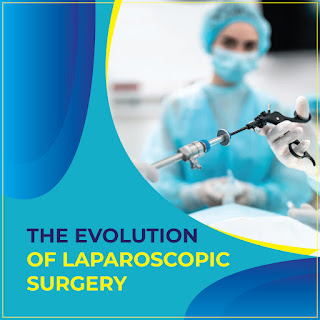
The evolution of laparoscopic surgery

Image
  You must have heard about laparoscopic surgery, but don’t worry, even if you haven’t, we are going to shed some light on you about the modern surgical technique. This blog will take you through the evolution of laparoscopic surgery in an interesting and easy-to-understand way, you can use the information given here in your school or college projects. Laparoscopic surgery through the ages Laparoscopic surgery is a modern surgical technique that is also known as minimally invasive surgery as the incisions made during surgery are very small, laparoscopy was found way back between 460 and 375 BC 5 changing trends in laparoscopic surgery to watch ,  and has gone through various changes from there into what  Laparoscopic Surgeons In Jaipur   such as Dr. Vipin Jain now use. The persons behind laparoscopy Phillip Bozzini: - Phillip Bozzini was responsible for creating the first cystoscope, oddly enough, it was never used on humans, later in 1805 the man developed...

Laparoscopy or open surgery: which is best for you?

Image
  None of us wants an operation, because of the various risks and side effects involved with it, but some diseases can’t be treated by just taking medicinal courses, such diseases are often fatal and we must get ourselves treated via surgery as soon as possible. Over the years, a new, much safer modern surgical technique called laparoscopic surgery was invented, but still open surgical operations are also performed. Today we on behalf of the  Best Laparoscopic Surgeon in Jaipur ,  are going to discuss, laparoscopic and open surgery, the advantages of both, and then conclude which one is right for you. Open surgery Open surgery is the traditional method to operate; it was there before the invention of laparoscopy and is still in use even after laparoscopy. Surgeons use a scalpel to make an incision around 3 to 10 inches (hence the name open surgery because of the incisions being so big) at the infected area and then use several instruments for operation. Advantag...

Gall stones: causes, symptoms, treatment

Image
Underneath our liver an organ is situated in the digestive system which is known as gallbladder. A digestive fluid produced by liver called bile is stored in gallbladder. It has duty to transfer the stored fluid into small intestine to help in breaking down of fatty foods.   Deadened deposits of digestive fluid (bile) in gallbladder or bile duct are referred as gallstones. To understand gall stones better let’s learn about: Cause of gall stones Symptoms of gallstones Treatment of gallstones What causes gallbladder stones? Some gallstones are formed of cholesterol while some are formed from calcium salts and bilirubin. Although there is not any proven theory for the cause of gallstones but some below mentioned points can give us idea about the formation of gall stones .   ·        Hefty amount of cholesterol in bile A study reveals that most of the gallstones are formed of cholesterol. From that we can conclude that excess amount o...